Everyday sleep
Screens Before Bed: How to Give Sleep a Better Chance
Look beyond the blue-light debate to the time, brightness and attention your evening screens ask of you.
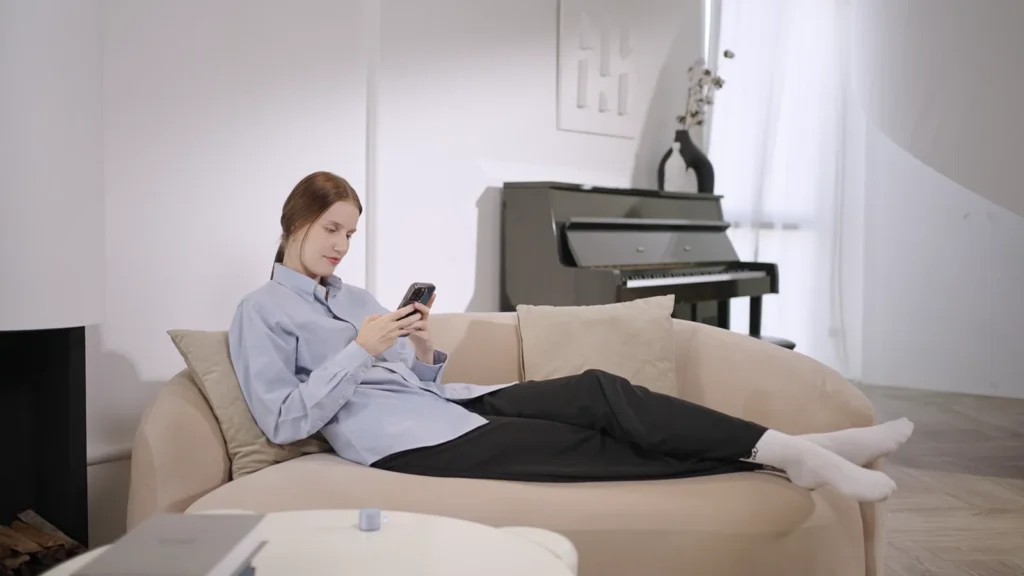
You open your phone to check tomorrow’s weather. Then there is a message, a video and something you meant to look up. The screen itself may be one issue; the half hour that disappears is another.
A useful approach to screens before bed considers both. Protect enough time for sleep, look at how bright the evening has become, and notice which activities are difficult to leave. You can make those decisions without treating every device as the enemy.
Start with the time a screen takes
If you keep watching until midnight and your alarm stays at 6 a.m., changing the display color cannot put the missing hours back. This is the most direct part of the problem, and it is easy to overlook when the conversation focuses entirely on blue light.
Ask when the evening stops being a choice you are enjoying and starts delaying the sleep you intended. Perhaps that is the next episode, the first work email after dinner, or the moment a short search becomes an open-ended feed. Find that point rather than setting a rule so ambitious that it lasts one night.
You might decide to finish at the end of the current episode, move a conversation earlier, or save a link for tomorrow. A specific stopping point gives you something to do when the next item appears.
What light can do
Light helps the body’s internal clock align with day and night. Bright artificial light late in the evening can interfere with the release of melatonin, a hormone involved in sleep timing, and make falling asleep harder. The NHLBI includes screens among the possible sources. 1
The room belongs in this discussion too. Dimming a phone while sitting under very bright lights addresses only part of the evening environment. Look at the whole setting: the overhead lights, the television, and the device held close to your face.
What a well-known e-reader study actually tested
In a randomized laboratory study, twelve healthy young adults read either a light-emitting e-book or a printed book for about four hours before bed, over five consecutive evenings in each condition. With the light-emitting device, participants took longer to fall asleep, their body clocks shifted later, and they were less alert the following morning. 2
That finding helps explain why evening light deserves attention. It does not establish that a brief message check has the same effect as four hours of reading in the study’s controlled conditions. The duration and setting matter when interpreting a headline.
Use the evidence to examine your own evening rather than to fear a single glance at a screen. If you spend hours on a bright device just before bed and then struggle to settle, there is a clear pattern worth changing.
Night mode is a setting, not a sleep guarantee
Warmer display settings may be comfortable to look at, but a feature name is not proof of better sleep. A 2021 trial assigned 167 young adults to use an iPhone before bed with Night Shift on, use it with Night Shift off, or avoid phone use. Across the full sample, the researchers found no significant differences in measured sleep outcomes between the groups. 3
That study does not settle every question about screens. It does give a reason to avoid relying on a display filter alone. A warmer screen can still show the work discussion you cannot stop thinking about, or the video that keeps you awake past your intended bedtime.
Choose a boundary that fits your evening
Try separating necessary use from use that keeps expanding. Setting an alarm, checking a travel update and arranging urgent care are different from browsing with no endpoint. Decide what needs to be done, finish it, then give yourself permission to stop.
- Make the ending visible. Set a reminder for the time you intend to leave the screen, or agree on an ending with someone you are watching with.
- Prepare the next step. Put a book, tomorrow’s clothes or whatever you need within reach so stopping does not turn into another search.
- Remove the automatic restart. Turn off autoplay or nonessential notifications if these are what keep pulling you back.
- Leave urgent access intact. Use contact exceptions when someone genuinely needs to reach you.
Choose an interval before bed that is workable for your life and test it. The goal is a boundary you can repeat, rather than an exact number of screen-free minutes that becomes another thing to worry about.
If you have to work late
Sometimes the screen cannot go away. Finish the essential task in a setting that is comfortably lit, use a screen brightness appropriate to that room, and avoid adding unrelated browsing when the task ends. The NHLBI’s guidance on bright evening light supports paying attention to brightness; it does not require working in darkness or straining your eyes. 1
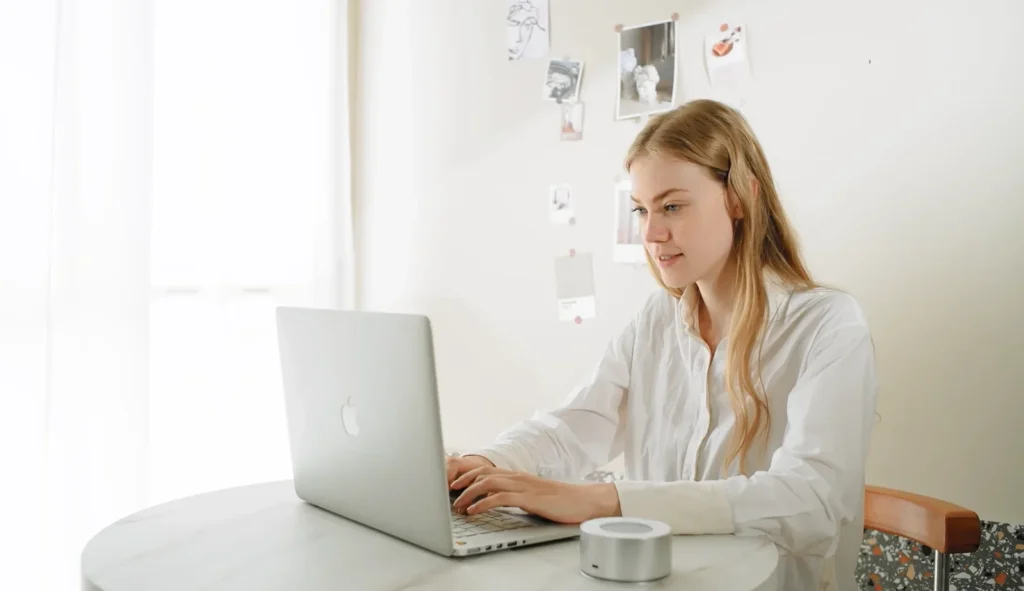
Write down the next action for tomorrow before you close the laptop. That is a practical way to leave the task somewhere other than in an open tab. If late work repeatedly removes your sleep opportunity, consider what deadline, expectation or handover needs to change.
Judge the change by your nights
For several evenings, note when you meant to stop, when you actually stopped, and when you went to bed. Add a brief morning observation about sleep and alertness. This can show whether the main benefit was earlier bedtime, a less demanding final hour, or simply fewer interruptions.
Keep technology useful to you. Give sleep a clear place in the evening too, with an ending that does not depend on the internet running out of things to show you.